About two years ago, I started collecting articles, information, and research on the Education reEnvisioned BOCES (ER BOCES). My understanding of BOCES was minimal, and I quickly learned that BOCES in Colorado are regional education cooperatives that allow school districts to pool resources and share specialized services that individual districts couldn’t easily or affordably provide on their own. What baffled me was the way in which the ER BOCES was utilizing this designation, not for pooling resources, but by creating a space outside the public system yet still in the system.
As I dug deeper, I realized that providing parents more choice for their children was the ultimate goal of the ER BOCES. Through homeschool enrichment programs, brick and mortar schools like Ascend College Prep, online schools, and finally individual contract education, the ER BOCES was pushing the boundaries of state statute in the name of innovation. The total cost of the ER BOCES on the state (from my estimate) was about $60 million dollars of taxpayer dollars. Innovation or bust, my curiosity peaked.
That innovation, it turned out, came with a cost beyond dollars. It came with accountability gaps that were harder to defend. Audits revealed that these public school dollars were flowing into a gray area that was beyond my scope of research. Public dollars for religious schools, sports equipment and ski passes were unearthed in the audit. When Rep. Emily Sirota stood on the House floor and pointed out that public school families pay for those same activities out of their own pockets, she had a point. Accountability matters and guardrails on public spending should be carefully watched, but I worried about the potential loss of innovation for the homeschool enrichment programs and small contract education programs I had quietly watched flourish.
Amendments 42 and 33, added to the state’s School Finance Act late in the 2026 legislative session, were aimed squarely at reigning in the ER BOCES. The ER BOCES has shown rapid growth by authorizing these programs far outside its two-district footprint. Amendment 42 bars enrichment programs from offering activities not generally available through public schools and ends the practice of enrolling private school students in publicly funded enrichment. Amendment 33 restricts BOCES from authorizing brick-and-mortar schools that are run entirely by contractors outside their member districts. Together, they are projected to save the state roughly $21 million next year.
Policy is made at the capital, but children live in communities across our state that have now been affected by these legislative changes. The blunt edge of these amendments doesn’t land on bad actors, it lands on kids.
Take Rocky Stars Community Campus in Rocky Ford, a small, tuition-free microschool serving K–12 students with a mastery and project-based approach in a community where educational options are scarce. Or Justice and Heritage Academy in Conejos County, a microschool that has quietly become an anchor for families in one of Colorado’s most rural and economically challenged regions. In the vast, rural stretches of Colorado where diverse educational paths are already a rarity, countless students now face a precarious future due to these legislative shifts.
In the Denver metro, Gran Via Education, a Spanish language-immersive microschool built around outdoor learning and a deep sense of community, was preparing to grow from 13 students to more than 30 next year. Families had enrolled specifically for the bilingual environment and the time outdoors that most traditional schools simply can’t offer. That growth is now in jeopardy.
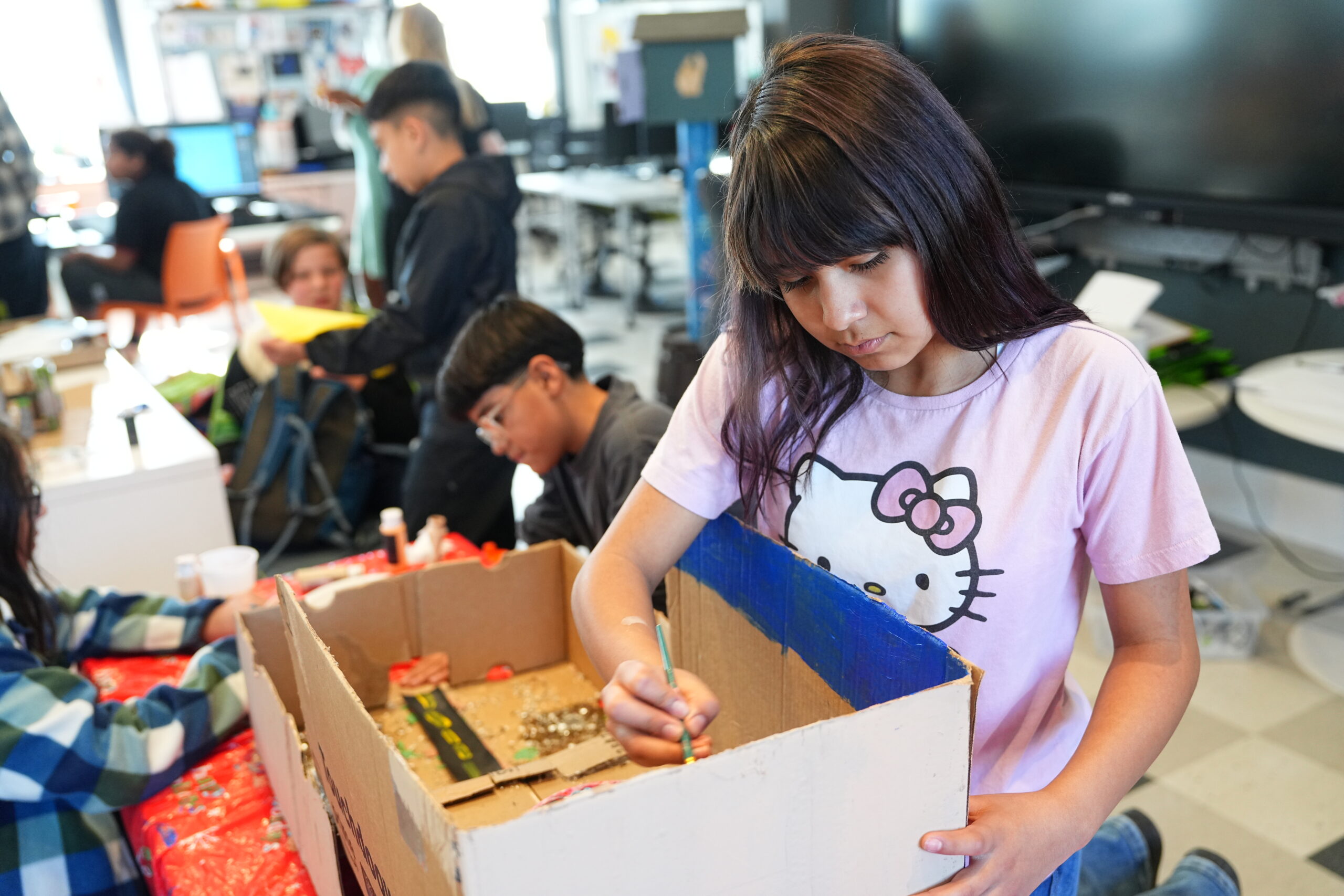
Then there’s La Luz Education, a Denver-area middle school that just completed its fifth and best year. In a season where assessment growth scores climbed, the real headline was something harder to measure: kids felt like they belonged. Middle school is the stretch where most kids feel lost, overlooked, and just told to “hang in there”. La Luz refuses to accept that as inevitable. Students leave “Base Camp” every day for hands-on learning with community partners like the Denver Zoo and History Colorado, and spend fully 25% of their school year outdoors. For families seeking something different for their 6th, 7th, or 8th grader, La Luz has become exactly the kind of place that proves alternative models can work.
These schools and cooperatives like them exist because the traditional model doesn’t serve every child. When we eliminate their funding pathways without building off-ramps, we don’t punish waste. We punish the most vulnerable learners.
A Horizon Worth Watching
Even in the midst of disruption, there is reason for cautious optimism.
Governor Polis has made clear he intends to opt Colorado into the Education Choice and Competition Act (ECCA) which is the first-ever national tax credit-funded scholarship program, passed as part of the federal legislation in 2025.
Under ECCA, donors receive a 100% federal tax credit for contributions up to $1,700 per year to approved Scholarship Granting Organizations (SGOs), which direct funds to eligible families for tuition, homeschool enrichment, and approved programs. The program takes effect in 2027, with governors needing to submit approved SGO lists to the U.S. Treasury by January 1 each year.
ECCA dollars can flow toward public school students accessing out-of-school-time enrichment, homeschool cooperatives, and small learning campuses in rural communities — exactly the kinds of programs that just lost their footing. It won’t restore everything that Amendments 42 and 33 disrupted. But it represents a fundamentally different financing model, one rooted in private charitable dollars rather than public school funding formulas, and one that could rebuild pathways for exactly the learners who just lost them.
Holding Both Truths
Colorado’s legislators weren’t wrong to notice that the system had been stretched in ways that strained public trust. That being said, it’s worth acknowledging something that often gets lost in that conversation: without the model built at the ER BOCES, many of the schools named in this article would never have come into existence. Pushing boundaries is the only way innovation is moving forward for education in our state. The ER BOCES lived in the gray language of the Schools Finance Act and without pushing the boundaries on that language, might not have been able to serve the many students across the state that have no choices for their education.
Unfortunately, legislators didn’t seem to understand the depth and breadth of the ER BOCES programs and not providing an off-ramp for the funding ultimately affects kids. The children enrolled in these programs didn’t create the problems that led to these amendments. They were just seeking a school or program that finally worked for them.
Colorado now has an opportunity to take both parts of this seriously: the accountability and the child. The ECCA opt-in won’t fix everything, but it could help spark a new generation of learning models. Schools that are built thoughtfully with community, and with staying power are created for the kids who need something different. They deserve more than just being told to “hang in there”.

Written By: Sarah Johnson
Sarah Johnson is an educational entrepreneur, novice farmer, and mother to two DPS children. She believes that education can be...
Read Bio Contact Sarah