
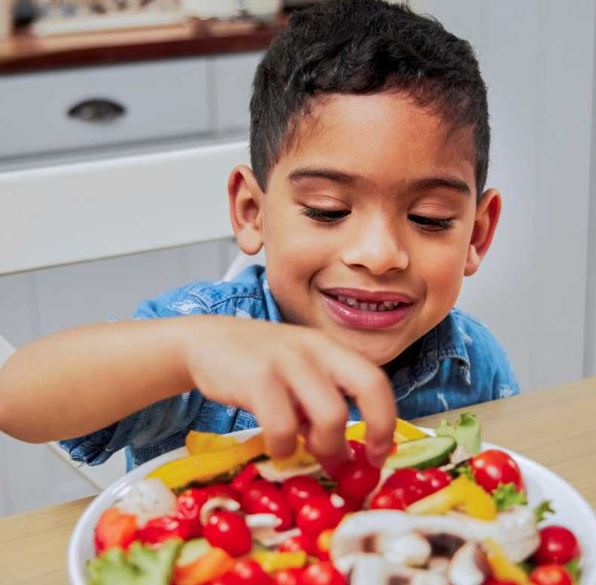
For years, Family, Friend, and Neighbor (FFN) caregivers across Colorado have been doing what they have always done: opening their homes, caring for children they love, and feeding them nourishing meals, often at their own expense.
They cook what they know. They share what they have. They stretch groceries to make sure every child is fed.
And for just as long, we have known that Colorado’s systems were not built with these caregivers in mind.
That may finally be starting to change.
In previous posts, I’ve written about how Colorado has failed to ensure equitable access to the Child and Adult Care Food Program (CACFP), now known in our state as the Colorado Food Program, for FFN caregivers. These are caregivers (grandparents, aunties, family friends, next door neighbors, etc.) who care for children outside of licensed child care settings and who make up a significant portion of Colorado’s early childhood landscape.
Historically, FFN caregivers in Colorado could only access the Colorado Food Program through a back-door pathway – they first had to be eligible to serve families receiving child care subsidies through the Colorado Child Care Assistance Program (CCCAP). Only then could they participate in CACFP and receive reimbursement for the food they were purchasing for all of the children in their care.
While well-intentioned, this approach came with serious problems.
For example, if an FFN provider stopped caring for a CCCAP-enrolled child, they could lose access to food reimbursements for all the children in their care. A single change in one family’s circumstances could abruptly cut off a caregiver’s ability to receive support for food they were already buying and preparing every day.
For many caregivers, this made participation risky and unstable.
Mandated by HB24-1223, a comprehensive study was conducted in 2025 to answer a critical question: Is it feasible for Colorado to create a direct, stand-alone pathway for FFN caregivers to access the Colorado Food Program that is not tied to child care subsidies?
The study looked broadly and deeply:
– It examined how other states have successfully created FFN-specific CACFP pathways.
– It analyzed Colorado’s rules and regulations.
– It included interviews with FFN caregivers across the state.
– And it assessed what it would actually take to implement such a pathway here.
The conclusion was clear: yes, Colorado can do this. And perhaps just as importantly, we should.
After years of advocacy and study, we are finally seeing that research translate into action.
The Colorado Department of Public Health and Environment and the Colorado Department of Early Childhood are now working collaboratively, alongside FFN caregivers, leadership from the FFN Advisory Council, the Colorado Statewide Parent Coalition, the Donnell-Kay Foundation, current CACFP sponsors, and other partners, to design a new, direct pathway for FFN caregivers to access the Colorado Food Program.
This is not theoretical anymore. This is real work happening now.
And while there is still much to figure out, the vision for the future is surprisingly simple.
Imagine an FFN caregiver caring for several children in their home. They are already buying groceries. They are already preparing meals. And they are already feeding children with love and care.
Now imagine that caregiver being able to:
– Visit a website to apply to participate in the Colorado Food Program;
– Complete an application process designed with the specific needs of FFN caregivers in mind; and
– Receive monthly reimbursements, in some cases hundreds of dollars per month, to offset the cost of feeding children in their care.
This public benefit program exists for a reason: to ensure children receive nutritious meals while in care settings. And Colorado FFN caregivers deserve access to it, just as they do in many other states where CACFP participation is not tied to child care subsidies.
Let me be clear, this work is complex. It will take time, with an expected rollout by the end of 2026. There are a lot of details to iron out. Systems to design. Guardrails to build.
If we are going to do this, we must do it right.
That means creating a pathway that is:
– Easy to understand and navigate
– Culturally- and linguistically-responsive
– Respectful of caregivers’ time and lived experience
– Mindful of the foods, customs, and caregiving practices that FFN providers already bring to their work
If you are an FFN caregiver and this matters to you, make your voice heard by:
– Attending meetings of the FFN Strategic Action Network and the FFN Advisory Council
– Letting decision-makers know you want this pathway
– Asking to be involved in shaping it
– Sharing what would make the process accessible, respectful, and usable for you
And if you are an FFN advocate, policymaker, or community partner, help spread the word. Let caregivers know this is coming. Encourage participation. Keep pounding the drum.
Systems change when the people they are meant to serve demand that they work.
This has been a long time coming. And while there is still work ahead, we are closer than ever to ensuring that FFN caregivers in Colorado can access the food support that they – and the children in their care – deserve.

Written By: Miguel In Suk Lovato
Miguel In Suk Lovato believes in child/youth-centered educational opportunities that foster curiosity, creativity, and critical thinking. He recognizes that factors...
Read Bio Contact Miguel